
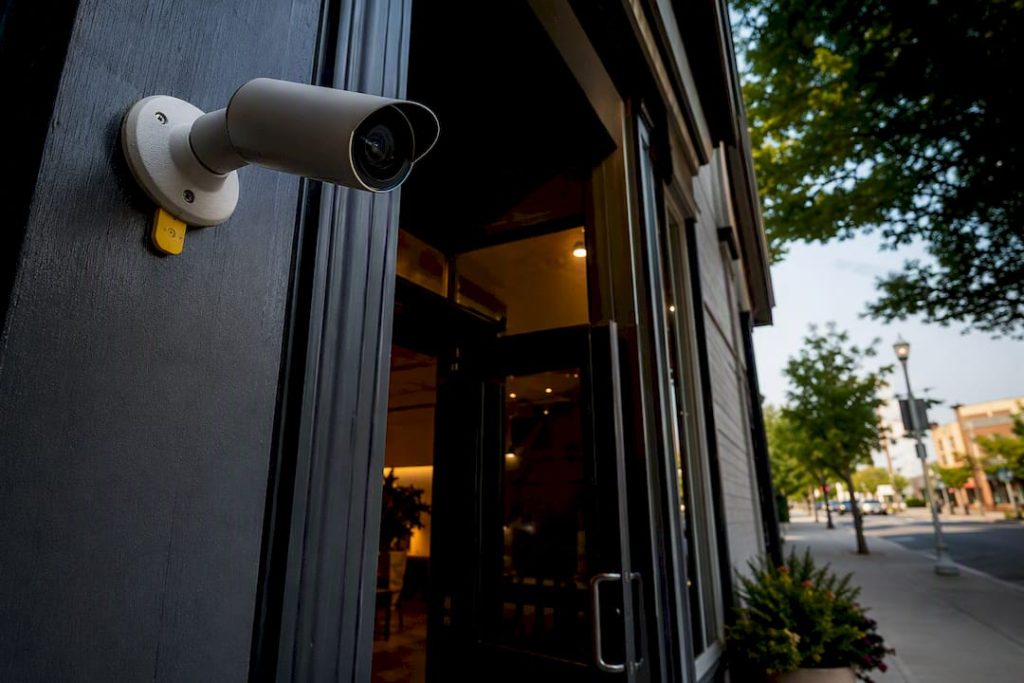
Yes, video cameras are generally lawful in Michigan as long as they don’t capture people in a “private place” without consent. The controlling statute is MCL 750.539d, which also gives homeowners a residential monitoring exemption. The single biggest risk isn’t the camera lens at all. It’s the microphone, since audio recording falls under Michigan’s separate eavesdropping law, MCL 750.539c, and bathrooms, changing areas, and bedrooms remain off-limits no matter who owns the property.
TL;DR:
- Recording audio with security cameras in Michigan can be a felony if all parties are not consenting, making audio recording riskier than video alone.
- Cameras placed in private spaces like bedrooms, bathrooms, or inside tenants’ units violate privacy laws, while public areas such as driveways and entrances are generally legal to monitor.
- Employers should restrict surveillance to open work areas and avoid private spaces, ensuring policies include clear signage, consent procedures, and proper data security measures.
- Drones that fly over neighboring yards or into private spaces are subject to the same privacy restrictions as fixed cameras, regardless of FAA regulations.
- Landlords can monitor shared areas without consent but must avoid installing cameras inside tenants’ private units, with tenants permitted to install cameras aimed only at their own entrances.
Table of Contents
- What Do Michigan’s Security Camera Laws Actually Say?
- Where Can You Point a Camera in Michigan?
- Why Does Audio Recording Create Bigger Legal Risk Than Video?
- What Should Michigan Employers Know About Workplace Cameras?
- What Are the Penalties for Illegal Surveillance in Michigan?
- How Do You Build a Compliant Camera System, Step by Step?
- Are Dashcams and In-Vehicle Cameras Legal in Michigan?
- Can You Fly a Drone With a Camera in Michigan?
- Do Landlords Have Different Camera Rules Than Tenants in Michigan?
- What Consent Rules Apply in Apartment Buildings and Condos?
- How Does Michigan Law Affect Police Use of Surveillance Cameras?
- How Managed IT Providers Help Michigan Businesses Stay Compliant
- How Mavericks Office Solutions Helps You Manage Camera Compliance
- Where to Read the Actual Statutes and State Guidance
- Sources
- FAQ
What Do Michigan’s Security Camera Laws Actually Say?
Michigan’s video surveillance rules trace back to one core statute: MCL 750.539d. It makes it a felony to install, place, or use a device to photograph, record, or eavesdrop on someone in a private place without the consent of the people entitled to privacy there. That’s the legal backbone behind “security camera laws Michigan” searches, and it’s worth knowing by name if you ever need to explain your setup to a tenant, employee, or attorney.
Subsection 2 carves out a residential monitoring exemption. If you own or primarily occupy a residence, you can run security cameras on it without seeking anyone’s permission, unless the purpose is lewd or lascivious. This exemption is the reason your Ring doorbell and driveway camera are fine.
Two related statutes matter just as much. MCL 750.539c is the eavesdropping law covering audio, and it requires consent from every party to a private conversation. MCL 750.539j separately criminalizes recording or distributing images of an unclothed person where they’d reasonably expect privacy, with severe penalties attached. Distributing or sharing footage captured in violation of these laws is punished as its own offense, separate from the act of recording itself.
Where Can You Point a Camera in Michigan?
Michigan surveillance law hinges on a legal concept called “reasonable expectation of privacy.” Public-facing areas of your property are fair game. Private, enclosed spaces where someone would expect to be unobserved are not, and the line between them is where most disputes start.
Generally lawful camera placement includes:
- Your front yard, porch, and driveway
- Exterior walls aimed at your own property line
- Parking lots and building entrances for businesses
- Common areas like a store floor or lobby
Clearly prohibited locations include bathrooms, locker rooms, changing areas, and any bedroom where someone might sleep or dress, even in your own home if you’re renting out a room. MDHHS guidance recommends treating restrooms and bedrooms as private by default and running a site-specific privacy assessment for anything in between, since waiting rooms, break rooms, and shared hallways can go either way depending on how they’re actually used.
If your camera’s field of view happens to catch a neighbor’s window or backyard, angle it away or use privacy masking in the camera’s software. It’s rarely illegal by itself, but it invites complaints and, in a dispute, makes you look like you weren’t careful about it.
Why Does Audio Recording Create Bigger Legal Risk Than Video?
Michigan is an all-party consent state for private conversations under MCL 750.539c, and that single fact catches more camera owners off guard than any other rule in this area. Recording someone’s voice without every participant’s consent is a felony, separate from whatever rules apply to the video itself. According to RecordingLaw’s Michigan surveillance guide, this is exactly why doorbell cameras and indoor nanny cams carry more legal exposure than most buyers realize. They’re marketed as video devices, but nearly all of them record audio by default.
The riskiest situations involve two employees having a private conversation near a camera, a nanny cam placed in a room where a caregiver expects privacy, and any doorbell camera positioned close enough to a neighbor’s porch to pick up conversations there.
The fix is usually simple. Disable the microphone in your camera’s settings, post clear signage announcing the recording, or get written consent from anyone regularly in frame. If you have a use case where audio genuinely matters, talk to an attorney before you turn it on.
What Should Michigan Employers Know About Workplace Cameras?
Open work floors, warehouses, retail spaces, and exterior areas are generally safe to monitor in a Michigan workplace. Private offices, enclosed break rooms, and restrooms are a different story, and courts tend to scrutinize surveillance in spaces where employees reasonably expect to be unobserved even while at work.
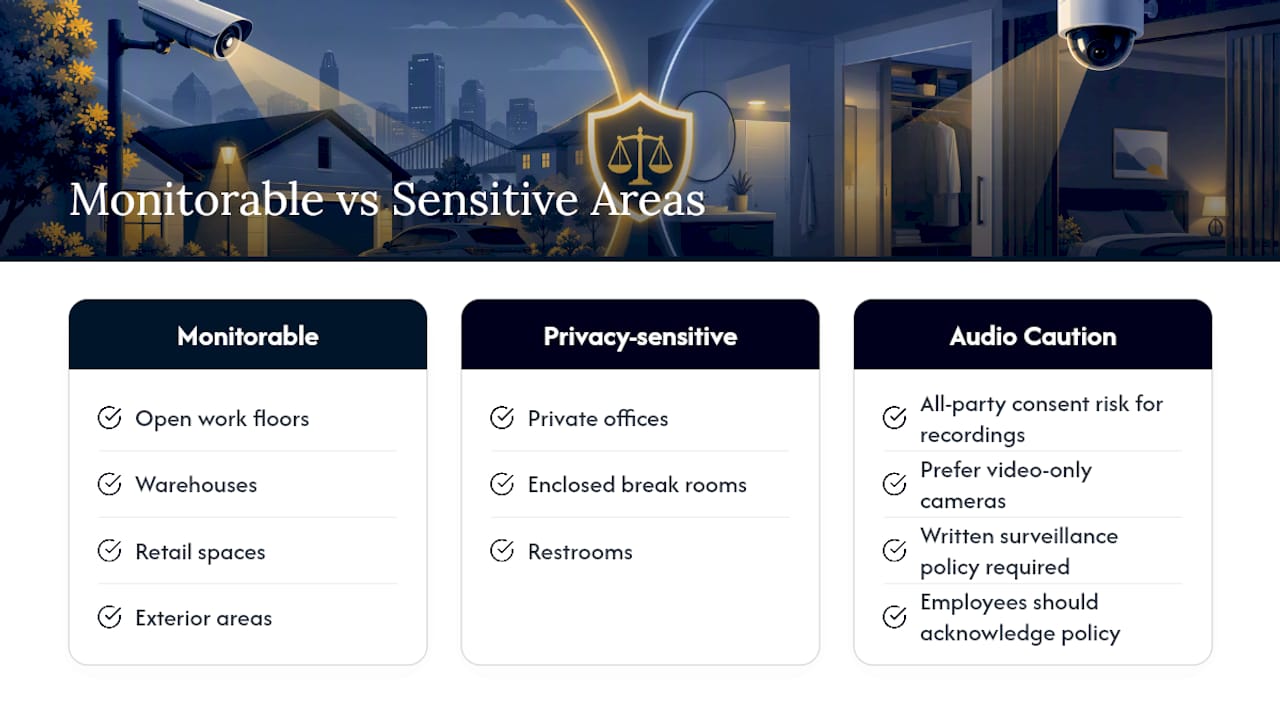
Before installing anything, check union contracts and existing employment agreements. Many collective bargaining agreements include specific surveillance clauses, and installing cameras without following that process can trigger a grievance regardless of what state law otherwise allows. Audio capture of employee conversations carries the same all-party consent risk described above, so the safest default for any workplace camera is video-only with a written surveillance policy that employees acknowledge. Businesses in healthcare, shelters, or other regulated sectors often face additional obligations layered on top of the general statute.
What Are the Penalties for Illegal Surveillance in Michigan?
Violating MCL 750.539d carries real consequences. A first offense can bring felony penalties including possible prison time and fines up to legal maximums, and repeat offenses carry increased penalties. Distributing unlawfully obtained recordings under subsection (1)(b) is punished by felony penalties with prison time and fines, creating separate liability for forwarding or sharing prohibited footage.
Victims aren’t limited to criminal complaints. MCL 750.539h allows civil remedies, including injunctions, actual damages, and punitive damages. Someone caught on camera in a private place without consent can sue, and evidentiary issues around how the footage was obtained can complicate a defendant’s position considerably.
How Do You Build a Compliant Camera System, Step by Step?
Turning these statutes into a working setup doesn’t require a law degree. It requires a checklist you actually follow before you drill a single mounting bracket into a wall.
- Map every camera’s field of view before installation and document what each one is meant to capture and why.
- Run a private-place assessment for any borderline area, following the same logic MDHHS guidance recommends for organizations that operate service facilities.
- Default to video-only. Disable the microphone unless you have a documented, legally reviewed reason to record audio.
- Narrow the field of view so it excludes neighboring windows, yards, or shared spaces wherever possible.
- Post visible signage. It isn’t a legal requirement, but it helps rebut any claim that surveillance was secret, which matters if a dispute ever ends up in court.
- Get written consent for any camera placed in a space where consent is genuinely required, such as a shared workspace with a known audio feature.
- Set a documented retention schedule. Michigan has no single statutory retention period for private-sector footage, so you need your own defensible policy and a stated reason behind it.
- Encrypt stored footage and log every access. Ambient pairs legal review with technical controls like locked fields of view, microphone disablement, and encrypted storage as the baseline for minimizing exposure.
- Put it in writing. A camera policy that names who can view footage, how long it’s kept, and how requests for access are handled protects you if anyone ever challenges your practices.
- Review annually and loop in legal counsel whenever you add a new camera type, location, or use case that wasn’t part of your original assessment.
Pro Tip: Treat every camera addition as a mini compliance review, not just a hardware install. A five-minute privacy assessment before mounting a new unit is far cheaper than defending a civil claim after the fact.
Are Dashcams and In-Vehicle Cameras Legal in Michigan?
Dashcams and other in-vehicle cameras are legal to install and use in Michigan, and the video-recording side of the analysis works the same way it does for a stationary camera. You’re recording what happens in public view from your own vehicle, and there’s no reasonable expectation of privacy on a public road.
Audio is where vehicle cameras get complicated. Many dashcams and rideshare cameras record sound continuously, and Michigan’s all-party consent rule under MCL 750.539c applies just as much inside a car as it does in a living room. If you’re a rideshare or delivery driver recording passengers, or a business owner tracking a company fleet, that microphone can create the same felony exposure discussed earlier unless every party in the vehicle consents. Some drivers handle this with a visible sign or verbal disclosure at the start of a ride, though the safest approach for continuous recording is disabling audio entirely unless you’ve confirmed consent.
Placement also matters for interior-facing cameras. A camera aimed at your own dashboard and windshield is uncontroversial. One angled to continuously capture passengers or a rear seat raises the same private-place questions that apply to any indoor camera, particularly for rideshare vehicles where passengers may have a stronger expectation of not being filmed than a typical driver assumes.
Can You Fly a Drone With a Camera in Michigan?
Drone camera use in Michigan sits at the intersection of state privacy law and federal aviation rules, and both apply simultaneously. The Federal Aviation Administration governs where and how you can fly, but MCL 750.539d still governs what you’re allowed to record once the drone’s camera is rolling.
That means flying a drone over your own property to check your roof is uncontroversial. Flying one low over a neighbor’s fenced backyard, hovering near a bedroom window, or capturing someone in a space where they’d reasonably expect privacy runs into the same private-place prohibition that applies to a fixed security camera. The device changes, but the legal test doesn’t. Courts and regulators generally treat drone footage of clearly public areas, like a street or a commercial parking lot, differently from footage that peers into fenced yards or through windows.
Businesses using drones for property inspections, real estate photography, or security patrols should apply the same private-place assessment recommended for fixed cameras, and document the intended flight path and purpose in advance. If a drone’s camera also records audio, the same all-party consent exposure under MCL 750.539c applies. Given how easily a drone can drift over a property line, this is one of the areas where a quick legal consult before regular use is worth the cost.
Do Landlords Have Different Camera Rules Than Tenants in Michigan?
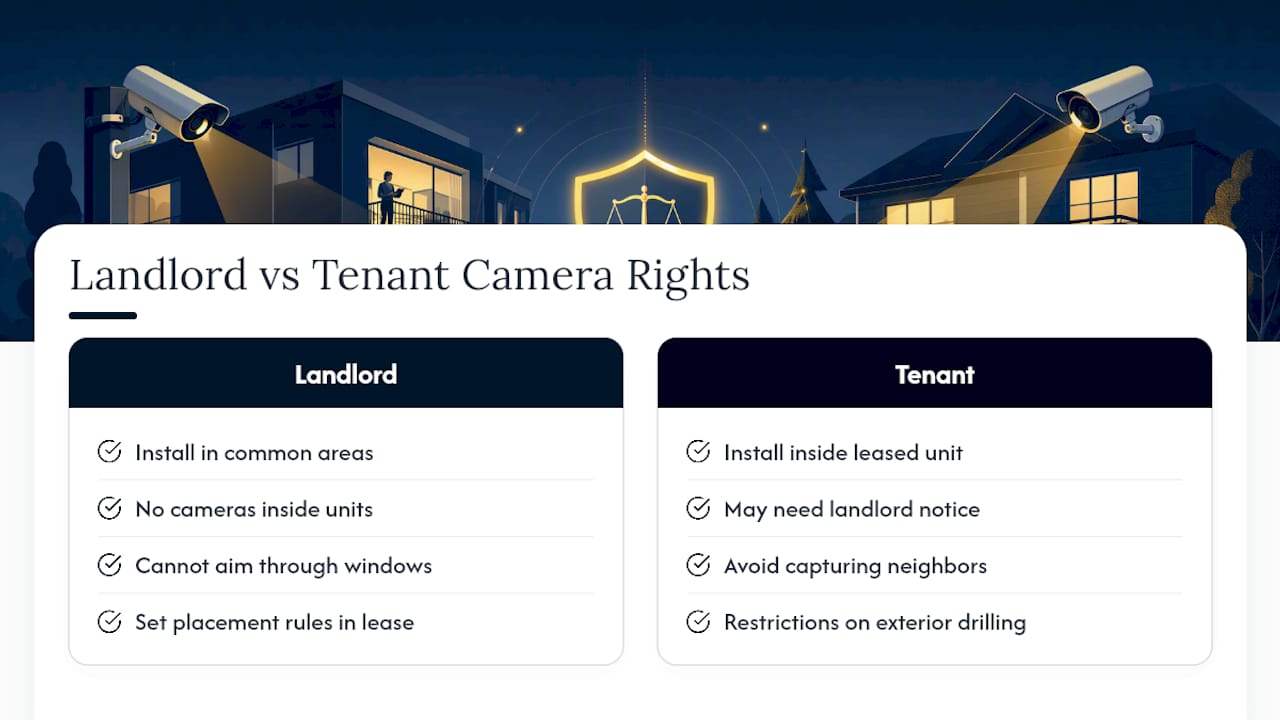
Landlords and tenants operate under the same underlying statute, but their practical rights differ sharply based on what space they control. A landlord can install cameras in common areas they own and manage, such as building entrances, parking lots, hallways, and laundry rooms, without needing a tenant’s individual consent, because those are shared spaces the landlord is responsible for securing.
What a landlord cannot do is install a camera inside a tenant’s private unit, including entryways to individual apartments where the camera captures activity inside the leased space, without the tenant’s knowledge and agreement. A camera aimed through a tenant’s window or positioned to observe inside their unit runs squarely into the private-place prohibition under MCL 750.539d, lease terms aside.
Tenants, meanwhile, generally have the right to install their own security cameras inside the unit they lease, similar to the residential monitoring exemption that applies to homeowners, though many leases require notifying the landlord or restrict exterior-facing modifications like drilling into shared walls. A tenant’s camera aimed outward toward a shared hallway can also raise privacy concerns for neighbors using that same space, so tenants installing their own doorbell or hallway-facing cameras should angle them to capture only their own doorway. Property managers overseeing multiple units should put camera placement rules directly into the lease agreement, so expectations are clear before a dispute happens rather than after.
What Consent Rules Apply in Apartment Buildings and Condos?
Multi-unit residential buildings create a specific wrinkle: shared spaces mean overlapping privacy expectations for people who don’t share a lease. A building owner or property manager can generally monitor lobbies, mailrooms, elevators, and parking structures under the same reasoning that applies to any business’s common areas, since these are not private places for any single resident.
Where it gets sensitive is audio. A camera with a working microphone in an elevator or hallway can pick up private conversations between residents who never agreed to be recorded, and MCL 750.539c’s all-party consent requirement doesn’t care whether the space is shared. This is one of the clearest cases where disabling audio by default protects a property manager from an exposure they may not even realize exists.
Individual residents installing their own cameras, such as a smart doorbell outside a condo door, need to be careful about the angle. A camera that only captures the resident’s own door and welcome mat is low risk. One that sweeps across a shared hallway and catches neighbors coming and going repeatedly raises the same concerns as any other camera aimed at a space someone else has a partial claim to. Condo associations and HOAs often address this directly in their governing documents, and checking those rules before installation avoids a dispute with the board later.
How Does Michigan Law Affect Police Use of Surveillance Cameras?
Law enforcement in Michigan doesn’t get a blanket exemption from privacy protections just because a camera is government owned, but its authority to gather evidence operates under a different legal framework than private citizens use. Police generally need a warrant to access footage from inside a private place, and Fourth Amendment protections against unreasonable search continue to apply regardless of whether the footage in question comes from a police-owned camera or a private business.
Where this affects everyday Michigan camera owners is evidence sharing. If your business or home camera captures footage relevant to a police investigation, handing it over voluntarily is generally not a problem, since you’re not the one violating anyone’s privacy by recording your own property. Complications arise when a private camera’s footage was itself captured unlawfully, such as audio recorded without consent under MCL 750.539c. Evidence obtained in violation of Michigan’s surveillance statutes can face challenges in court regardless of who’s using it, which is part of why documenting your camera’s purpose and placement matters even outside of any dispute with a neighbor or employee. It gives you a clean record if that footage is ever requested as evidence.
How Managed IT Providers Help Michigan Businesses Stay Compliant
Turning statute language into daily practice takes more than a policy document. It takes enforced access controls, encrypted storage, and someone watching for gaps. Managed services handle the retention schedules, access logging, and encryption that keep footage secure and support breach-notification duties if something goes wrong. A local, USA-based help desk with fast response times matters here too, since a compromised camera system needs quick containment, not a ticket sitting in an offshore queue.
— Jeffrey
How Mavericks Office Solutions Helps You Manage Camera Compliance
Most Michigan businesses don’t have a compliance team dedicated to surveillance law. They have an office manager who installed some cameras a few years ago and hasn’t looked at the settings since. Mavericks Office Solutions closes that gap with Cameras & Access Control built into a broader technology stack, so your camera policy, retention schedule, and access logs get the same ongoing attention as the rest of your network.

Beyond installation, this is where Managed IT Services and Cybersecurity do the heavy lifting: enforcing encryption on stored footage, restricting who can pull clips, and monitoring the whole system around the clock instead of leaving it to whoever remembers to check. Mavericks Office Solutions runs on a 100% USA-based help desk with an average response under 12 minutes, so if a camera system flags an issue or you need a policy reviewed before installing new units, you’re talking to someone locally, not waiting on a call center overseas. If your current camera setup was installed without a documented privacy assessment or retention policy, request a compliance review and get a clear picture of where your exposure actually sits.
Where to Read the Actual Statutes and State Guidance
For the primary legal text, read MCL 750.539d on the Michigan Legislature’s site directly. The MDHHS surveillance and security cameras guidance offers practical examples of private versus public spaces, and RecordingLaw’s Michigan guide breaks down the audio consent rules in plain language.
This article is general information, not a substitute for advice from a qualified lawyer. Consult a qualified legal professional about your own circumstances before acting on anything here.
Sources
- MCL – Section 750.539d – Michigan Legislature
- Surveillance & security cameras — Michigan Department of Health & Human Services (MDHHS)
- Michigan Surveillance Camera Laws (2026): Privacy & Audio — RecordingLaw
- Ambient
FAQ
Can a Neighbor Point a Security Camera at My House in Michigan?
Yes, if the camera only captures areas visible from public view, like your driveway or front yard, since there’s no reasonable expectation of privacy there. It becomes a legal problem only if the camera looks into your home’s interior or another space where you’d expect privacy, such as through a window or into a fenced backyard.
Can Neighbors Complain About My Security Cameras?
Neighbors can complain, and often do, but a complaint alone isn’t a legal violation. The real question is whether your camera captures a space where the neighbor has a reasonable expectation of privacy; if it does, adjusting the angle or using privacy masking resolves most disputes before they escalate.
Can I Sue Someone for Recording Me Without Permission in Michigan?
Yes. Under MCL 750.539h, victims of unlawful surveillance can pursue civil remedies, including injunctions, actual damages, and punitive damages, separate from any criminal charges the recorder might face.
Can I Point My Security Camera at My Neighbor’s Property?
You should avoid it if the camera captures spaces like their windows, yard, or entryway where they’d expect privacy. It’s not automatically a felony, but if the camera also records audio of their private conversations, that crosses into eavesdropping territory under MCL 750.539c regardless of whose property the camera sits on.
Does Mavericks Office Solutions Help With Camera Compliance Reviews?
Yes. Mavericks Office Solutions offers Cameras & Access Control alongside managed cybersecurity services to help Michigan businesses document privacy assessments, enforce retention policies, and secure stored footage.